Tampilkan postingan dengan label Kawasaki Ninja 250. Tampilkan semua postingan

Sabtu, 28 Mei 2011

Detail kawasaki ninja 250

Look for "250" on this Kawasaki, and you won't find it. This was another appealing feature of the Kawasaki Ninja. Kawasaki has done a great job at hiding the fact that your "Bad Ass" new bike has a mere 248 CC displacement.

The Practical Features

The Kawasaki Ninja 250 is a lightweight street bike, weighing in at 300 lbs., yet can still reach speeds of 115 mph. A small, nimble motorcycle like the Kawasaki Ninja is great for the starter, because it has a 29.3" seat height. This low seat height is comfortable, and appeals to those riders who have a short inseam. Short riders are able to touch the ground with both feet.

Like an old friend, the Ninja is forgiving. If a new rider grabs too much throttle or grabs too much brake, not a lot happens. This motorcycle offers a gentler introduction to a beginner with its "pliant and forgiving gearbox." The beginner is not likely to spin the rear tire and/or dump the bike.

For the first time rider, choosing your first motorcycle is often a daunting decision. Now, more than ever, the motorcycle industry in North America is making high-quality, smaller displacement motorcycles that make excellent first motorcycles. But what bike is right for you? That really depends on a number of factors. In many jurisdictions, your choice in motorcycles may be limited by a graduated motorcycle licensing scheme. Often these systems limit your engine displacement or power-to-weight ratio rating. Be sure to check these details before purchasing a motorcycle.

The purpose of the bike is your primary consideration. Are you looking solely for a bike just to learn the basics? A 250cc bike or smaller, such as the Honda CBR125, or the Kawasaki Ninja 250, are both modern, high quality bikes that provide reliable mounts while you learn the ropes. The aforementioned Ninja can even manage highway speeds.

If you would like your first motorcycle to carry you past your first riding season, you may want to consider a motorcycle with a slightly larger displacement. Something in the 250-500cc range, such as the Suzuki GS500 or the Kawasaki Ninja 500 will allow for more than one season of riding. Larger displacement also means a larger bike, which may fit a slightly larger rider more comfortably, and also increase the feasibility of long range highway rides.

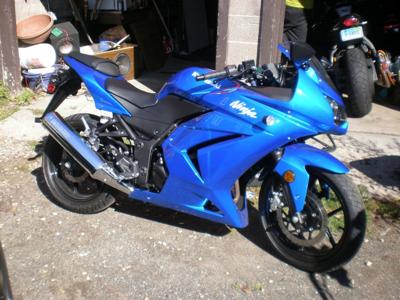
Blue color editions 2006 kawasaki ninja 250-R

Safety First - The Motorcycle Safety Foundation

His first smart move was taking advantage of the Motorcycle Safety Foundation Basic Rider's Class. Without prior riding experience, it's imperative to your safety and the safety of other motorists to get your initial instruction from the experts. The Motor Vehicle Safety Foundation offers a Basic Riders Class in cities and towns all over the US. Simply do a search by state and you will find several locations.

If your goal is to get your license to drive a motorcycle, this course will help you to achieve that goal. Start by getting your written permit, which costs about $30. The Basic Rider's class is a three-day, 14 hour course that costs approximately $275. Upon successful completion of the course, you will leave with your license.

Rather than rant and rave about how great this bike is for most of the article (and then dump on it at the end), I've decided to point out it's most obvious and debilitating flaws right away. If they don't bother you so much and you keep reading I know you'll love what you hear.

The Ninja 250R is limited by virtue of what it was built to be. At 249cc, it isn't exactly packing a whole ton of power. For those seeking mind-boggling acceleration and near-flight top speeds, the Ninja 250R isn't your bike (neither is the Ninja 500R or even 650R, either). For those seeking a bike that can pop wheelies at will, the Ninja 250R is definitely not your bike.

The size of the Ninja 250R is also limiting, as someone who is larger (in either height or girth) may find themselves looking more like a shriner than a rider. It also can be somewhat uncomfortable for those with long legs, as you have to really hug the bike.

New Blue 2009 kawasaki ninja 250r

Benefits of the Basic Rider's Course:

In addition to receiving expert riding instruction in a controlled, safe location, the Basic Rider's Course has several benefits:

* The rider leaves with improved skills and becomes a more defensive and observant rider.
* The BR course, in most states, will save you a portion of your motorcycle-endorsement test.
* Many insurance companies will discount, about 10% on motorcycle premiums every year, to students who have successfully completed a BR course.
* Some motorcycle distributors and brand-sponsored clubs will even reimburse all or part of your Basic Rider course tuition

My husband's Basic Rider class was a very diverse group of people, including: a doctor (Phd.); the twenty-something guys; the older retirees; and two thirty-something women. One woman, the mother of two kids, was getting her license and training so she could ride along side her husband. She is an inspiration, but not enough to get me to take the course, yet.

Popping wheelies, hitting 200mph, and going from 0 to 60 in three seconds are all things that will get you killed in a hurry. Fortunately, the Ninja 250R will not allow you to do any of those things. In fact, this little Kawasaki is limited in its velocity-related capabilities for good reason. Twist the throttle too hard and the rider won't find themselves eating an asphalt sandwich; apply a bit too much gas during a turn and the rider won't find themselves performing an aerial 360. This bike, by virtue of what it was designed to do, forgives you when you make small mistakes.

And, for a new rider (or a rider who doesn't want to deal with twitchy power bands), those are the very qualities you want in a bike. Smooth, linear acceleration (0 to 60 in just under 5 seconds is still very fast), with the ability to forgive you when you do it wrong. If only all relationships were so understanding.

The kawasaki ninja 250 Good Choice motorcycle

A Practical Choice: The Kawasaki Ninja 250

After researching and reading every last piece of data on all of the displacement street bike options, (did I mention that he is an engineer?) he bought a 2005 Kawasaki Ninja 250, in 2008, for $2,000. This Kawasaki Ninja model remained the same from 1987 to 2007. If you buy a 1998, it is going to look just like an 2007. The Ninja is the most popular motorcycle that Kawasaki manufactures. The Kawaski Ninja 250 has reached cult status as one of the best beginner sport's bikes, appealing to both men and women starters.

According to Motorcycle-usa.com writer Bart Madson, "The Ninja 250 claims the newbie crown by presenting the most refined package of the four (tested) and is aided by the fact that, at $2999 (new), it is also the least expensive. Of all the beginner bikes we tested, the little Kawi is the one with the greatest potential to keep its rider happy for the most amount of time." Refer to his "2006 Kawaski Ninja 250 Comparison" article here.

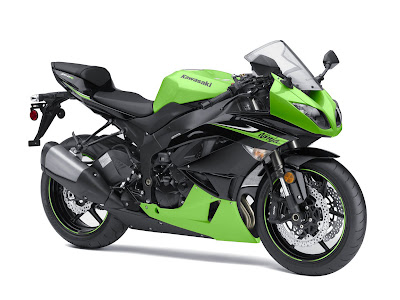
The Kawasaki Ninja 250R was given a facelift a few years ago, providing it with more aggressive fairing and a more modern appearance. This is the learner bike for those who don't want the world to know it's a learner bike. For those who aren't into motorcycles, the Ninja 250R looks just as aggressive and as mean as any other. For those who are into motorcycles, the chances are good that they'll acknowledge the Kawasaki 250R for what it is: a capable bike that is perfect to hone your skills on.

If you are still unsure if the Ninja is the motorcycle for you, take one out for a spin! They are inexpensive to purchase and maintain, but (and much more importantly), they will provide you with a grin-inducing ride each and every time you take it out. Fun is the number one reason people ride, and this Ninja is an absolute blast.

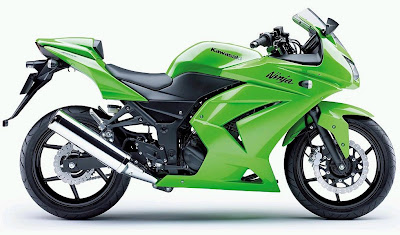
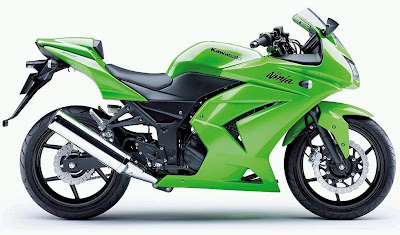
Kawasaki NINJA250R

Next, your budget will dictate many of your choices. If you are unsure whether you will really like motorcycling, reducing your initial investment is a wise idea. Enter older used motorcycles, which are initially inexpensive to purchase, and have gone through all the depreciation previously. Often you can sell such a motorcycle for what you have paid for it initially. Many of the modern, small displacement road motorcycles hold their value well, so for a larger investment initially, you can recover a large percentage of that initial cost. This way, you can avoid some of the higher cost maintenance issues that tend to come along with older motorcycles.

After narrowing down your choice based on purpose, fit and budget, you can then choose what bike resonates with you most. This is a more subjective consideration; however you will often know what the right bike for you is when you "fall in love with it". Once you've chosen your ride, you are now set to start building your skills and experience on a motorcycle. By this time, I hope you have already completed a motorcycle safety training program and have the proper protective gear. A little dose of humility while learning to ride will pay large dividends later in your motorcycle riding life. Learning the basics at slow speeds, how to interact with traffic, avoid collisions and ride in a variety of conditions will make you a better, safer rider.

https://blogger.googleusercontent.com/img/b/R29vZ2xl/AVvXsEhLbWUPeDdPM1rcc0lETDp6fNEUatO7YyCJbTIXi7mI2l12MnOgblB8vFlb31xy2rSHQqJ1G4tfJgJLEwEp7GGM0imNn1JiKZNzgxSn6lyMjOEQiPFFmF-ZaEsb201jK9Ky4CyruAyJOuU5/s1600/kawasaki-ninja-250r-launched-in-india.jpg 
https://blogger.googleusercontent.com/img/b/R29vZ2xl/AVvXsEiFmas7NysvaC6D-GKZjL_OimeMZ4wUkLDcoXr06Kwz-BVkCo3zo4k_Tol5oYCV4jDI7YYdMw58bk5m5DVjlwm5Qxdd_KnI32xT0A82yxrkCFeu1O-gpTXZsdrbQY9RC7l5df6Aqz4o06s/s400/0512008-kawasaki-ninja-250r.jpg
https://blogger.googleusercontent.com/img/b/R29vZ2xl/AVvXsEjfrhjUj6k8L7Amny-TXCGZNiDZiLNnAlpXKW4P5ATDWH_2XLcMC4F8XDZwDMiD239ix0tckuecfoyrRzoqAXIPK43ng4M7Elr_c6dQ_Q188ntWXFM0Gn_1YDyrQJ9wjnCxyen8z_WTwM1j/s400/kawasaki+ninja+zx+6r+2.jpg

Many women prefer a motorcycle with light weight and easy handling rather than one with tremendous acceleration. Women with a bit more experience in riding motorcycles prefer the Honda Rebel, Yamaha V-Star, or Suzuki SV650. Beginners are recommended to start out with a smaller bike such as the Kawasaki Ninja 250 and 500. The popularity of the Kawasaki Ninja 500 and 250 among the women motorcycle riders is due to their low seat height and light weight. The Suzuki SV650 is great for daily riding and can be easily modified.

Your local dealer can suggest excellent beginner bikes for new women motorcycle riders as well. These bikes will follow the Motorcycle Safety Foundation (MSF) standards. The qualities which most women motorcycle riders are looking for are light weight, low seat height, looks and comfort.
https://blogger.googleusercontent.com/img/b/R29vZ2xl/AVvXsEiFmas7NysvaC6D-GKZjL_OimeMZ4wUkLDcoXr06Kwz-BVkCo3zo4k_Tol5oYCV4jDI7YYdMw58bk5m5DVjlwm5Qxdd_KnI32xT0A82yxrkCFeu1O-gpTXZsdrbQY9RC7l5df6Aqz4o06s/s400/0512008-motor kawasaki-ninja-250r.jpg
https://blogger.googleusercontent.com/img/b/R29vZ2xl/AVvXsEjyJi0frJvLC1Bwy0Mkr1QjYerlafD8F1AFCLuzfhuuZY-7IydLEu1mdUx5sb6rLbKlDYatiYBZGmwJc7JGtDLQ2LIeTpZD9KtiH7Ybr4SCFQXJr17ygugINyY6zqZLaT7zuJyiHe_uJCQ/s1600/All New2008-kawasaki-ninja-250r.jpg

2010 250r kawasaki ninja 250CC (Black and Red Color)

If your middle-aged husband suddenly decides he's ready to buy his first motorcycle, the words "midlife crisis" may cross your mind. But if he's safe, smart, and buys a practical street bike, the only woman he'll be impressing is you with his monthly savings in gas!

Yes, it was the "Middle Eastern Oil Crisis" in 2008, where the average price of a gallon of gas in the US climbed just over $4 a gallon, that got my husband off the pot and onto his first motorcycle. He even created a graph depicting the US average gas prices over the last several years to prove his point.

If you asked me two years ago if he would ever get a motorcycle, I would have bet my life on it and said, "No, not the type, n-e-v-e-r." Well, Never say never! And while some loving wives might have reacted by saying, "No way!" I said, "Go For It!" Why? I used to love to ride dirt bikes as a kid, I have dreamed of riding my own motorcycle, and usually many of his ideas never come to fruition.
I'm a big fan of Kawasaki's entry-level sport bikes. They're attractive, reliable, punchy, get great gas mileage, and they hold their value quite well. Often, people who ride a Kawasaki Ninja 250R or 500R will hold on to that bike for their spouse or children, as it provides such a stable and reliable way to enter the sport bike world with minimal investment and maximum enjoyment.

If you've never ridden a Kawasaki Ninja 250R before I recommend that, immediately after reading this review, you get out there with your helmet in your hand and find one to ride! You'll find it to be a stable, windable little pocket-rocket that is just as happy being flicked through corners as it is cruising at 60 or 70 mph on the freeway

Jumat, 27 Mei 2011

Pictures of kawasaki ninja 250

The Tightwad has Made his Point

The Kawasaki Ninja 250 gas tank holds 4.8 gallons of gas, and his average off-highway gas mileage is 75 mpg. He documented and recorded his mileage from every single gas fill-up receipt for eight entire months, using mileage tracker.org, and so the self proclaimed Tightwad has made his point.

How Much Money Saved in Gas? The Results

His data compares his motorcycle gas mileage at 74.4 mpg to his 97 GMC K3500 Diesel Truck at 12 mpg. The data was collected over the period of time where gas and diesel prices peaked in 2008.The price of diesel reached nearly $5.00 per gallon and the price of gas was just over $4.00 per gallon. According to his results, if he had used his truck to commute during that period of time, he would have paid $1,251 in diesel. In other words, he saved $1,251 in 220 days by riding his motorcycle, which at this point is a few hundred dollars shy of paying for itself in saved gas money!

Also worth mentioning, the insurance premium on his 2005 Kawasaki Ninja motorcycle is less than $100 per year, which is nearly one third the price of His GMC Diesel truck insurance premium which is nearly $300 per year! The excise tax on his motorcycle is a mere $5 per year! During these economically challenging times, these savings are all significant. And while life is filled with many uncertainties, I am certain the price of gas and diesel will go up again!

So, for anyone who wants to follow their dream and become a motorcyclist, whether you be "Tough Guy", "Tough Girl" "Tightwad", or something in between, be safe, be practical and enjoy the gas savings as a fill-it-up-and-forget-it commuter.


Should you be looking for a motorcycle that you can learn the basics on and keep for the long term, you have a wide variety of options. There are a number of 600-650cc bikes in the North American market that have ample power, range and size to keep a rider satisfied for many seasons. The key is to stay away from true sport motorcycles, which come along with too much power for the beginner, as well as extremely high insurance rates.

If you are not afraid of a little do-it-yourself maintenance, a Japanese motorcycle from the 1980s can be a good bet. Despite some having larger displacement engines, they also tend to be heavier, thus reducing the power-to-weight ratio into the more manageable range. They are cheap, easy to find and offer long distance comfort and pleasant ergonomics (seating position, reach to the handlebars and leg position). Parts can be harder to find, and the potential of more maintenance is almost a certainty. My first motorcycle was an early 80s Honda 750, which fit my 6'0 frame much better than a small displacement motorcycle. It allowed me to learn the basics, without tempting me with too much power, too early on for my skill set.

As I alluded to before, a bike that fits you properly is a prime consideration. No matter how much you like a bike, if your feet do not touch the ground, you are in trouble. Conversely, if you are a taller rider, a smaller bike may be too cramped. Cramped ergonomics are particularly noticeable on long distance rides and can cause serious discomfort. A bad fit on a motorcycle is a safety hazard that should be avoided.